
Cut your electricity bill with grid-connected solar
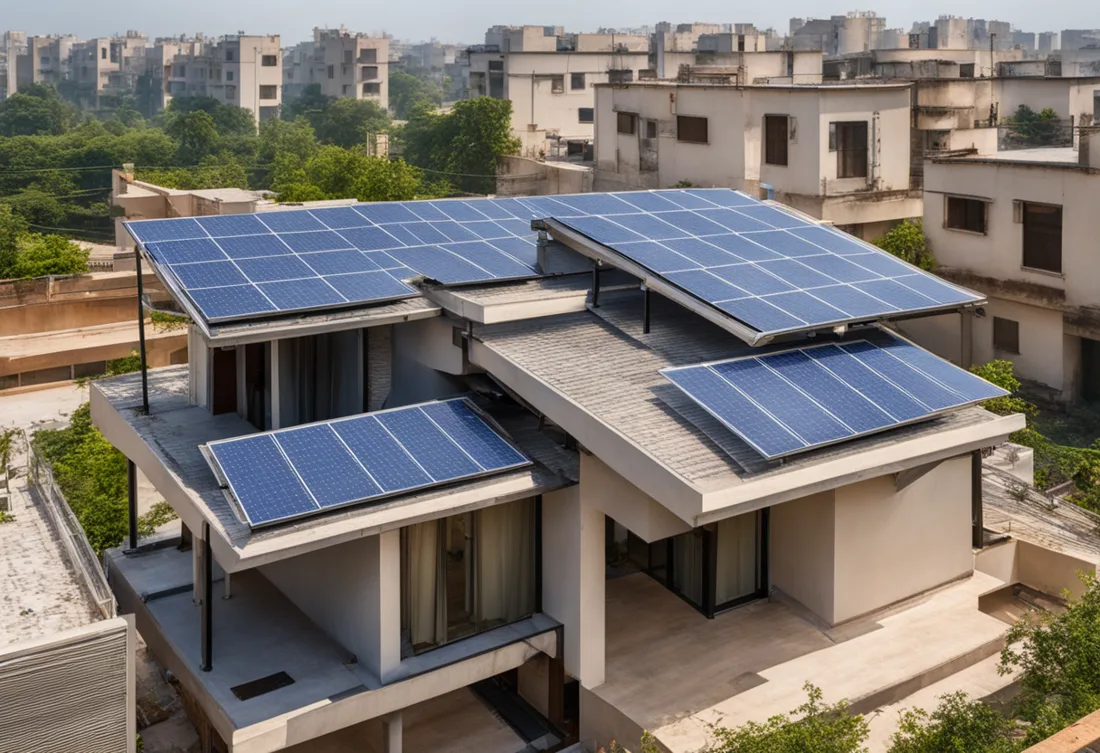
An on-grid (grid-tied) solar system powers your home from your rooftop during the day and uses the grid as a free “battery” through net metering. It is the most affordable way to go solar — and the only type that gets the full PM Surya Ghar subsidy.
Ideal for homes and businesses in cities with a reliable power supply.
- Up to ₹78,000 subsidy
- No battery needed
- 25-year panel life
What is an on-grid solar system?
An on-grid system connects your rooftop panels directly to the utility grid through a bi-directional (net) meter. During the day your home runs on solar power first. Any surplus flows to the grid and is credited to your account; at night or on cloudy days you draw power back from the grid.
Because there is no battery, the system is simpler, cheaper and almost maintenance-free.
- Lowest cost per unit of solar power
- Eligible for central and state subsidies
- Works with any home that has a grid connection
Components of an on-grid system
Solar panels
High-efficiency DCR modules on your roof convert sunlight into DC electricity.
Grid-tie inverter
Converts DC into grid-quality AC (230 V, 50 Hz) and tracks peak power with MPPT.
Mounting structure
Hot-dip galvanised steel frames, engineered to resist rust and strong winds for 25 years.
Net meter
A bi-directional meter that records units you export to and import from the grid.
Protection & cabling
DC/AC distribution boxes, solar cables, MC4 connectors, earthing and lightning arrester.
Monitoring
Track daily generation and savings from your phone through the inverter’s app.
From sunlight to savings in six steps
01Panels capture sunlight
Photovoltaic cells turn sunlight into direct current (DC) electricity.
02Inverter converts power
The inverter changes DC into AC that matches the grid and your appliances.
03Your home uses solar first
Lights, fans, fridge and ACs run on solar power whenever the sun is up.
04Surplus goes to the grid
Extra units flow out through the net meter and are credited to you.
05Grid fills the gaps
At night or on cloudy days you draw power from the grid as usual.
06You pay only the net
Your bill is calculated on imported minus exported units.
Which system size do you need?
A quick guide based on typical Indian sunlight. We confirm the exact size after a free site survey.
| System size | Approx. yearly generation | Good for | Central subsidy |
|---|---|---|---|
| 1 kW | 1,400 – 1,450 units | Small home, monthly bill up to ₹1,000 | ₹30,000 |
| 2 kW | 2,800 – 2,900 units | 1–2 BHK home | ₹60,000 |
| 3 kW | 4,200 – 4,350 units | 2–3 BHK with one AC | ₹78,000 |
| 4 kW | 5,600 – 5,800 units | 3 BHK with two ACs | ₹78,000 |
| 5 kW | 7,000 – 7,250 units | 3–4 BHK home | ₹78,000 |
| 10 kW | 14,000 – 14,500 units | Large homes, multiple ACs, small offices | ₹78,000 |
Generation varies by city, roof direction, shading and dust. Delhi and Uttar Pradesh offer additional state subsidies on top of the central amount.
Advantages and limitations
Why homeowners choose on-grid
- Lowest upfront cost of all solar systems
- Eligible for up to ₹78,000 subsidy
- Payback in about 3–5 years
- No battery to buy, maintain or replace
- Net metering credits every surplus unit
- Easy monitoring and simple billing
Things to keep in mind
- Switches off during a power cut (anti-islanding safety)
- Needs DISCOM approval and a net meter
- Needs shadow-free roof space
- Saves most when your daytime use is high
On-grid vs off-grid vs hybrid
Not sure which system fits your home? Here’s how the three compare side by side.
| Factor | On-grid | Off-grid | Hybrid |
|---|---|---|---|
| Grid connection | Required | Not needed | Required |
| Battery | Not needed | Required | Required for backup |
| Power during a power cut | No — shuts down for safety | Yes, from battery | Yes, for selected backup loads |
| Net metering & export | Yes | No | Yes, if DISCOM allows |
| PM Surya Ghar subsidy | Yes | No | Yes, if net-metered |
| Upfront cost | Lowest | Highest | Medium to high |
| Typical payback | 3–5 years | 6–8 years | 5–7 years |
| Maintenance | Low | Higher (battery care) | Higher (battery care) |
| Best for | Reliable grid, lowest bills | No grid / remote sites | Frequent power cuts |
Payback periods are typical ranges and depend on your tariff, usage, sunlight and system design.
How TPIL installs your system
01Free site survey
Our engineer checks your roof, shading, orientation and load.
02Design & proposal
You get a custom design, generation estimate and clear quote.
03Paperwork & approvals
We handle the PM Surya Ghar portal and DISCOM application.
04Installation
Mounting, panels, inverter and wiring — usually done in a day or two.
05Earthing & safety checks
Dedicated earthing and lightning protection for DC and AC sides.
06Net meter & handover
DISCOM inspection, net meter, commissioning and app setup.
Why TPIL
Solar backed by 20 years of power expertise
Frequently asked questions
Does an on-grid solar system need a battery?
No. The grid works like your battery — surplus units are exported during the day and drawn back at night through net metering.
Will my on-grid system work during a power cut?
No. For the safety of line workers, the inverter shuts down when the grid fails (anti-islanding). If you face frequent outages, consider a hybrid system.
Do solar panels work at night?
Panels generate only when there is daylight. At night your home runs on grid power, offset by the credits you earned during the day.
How much roof space do I need?
Roughly 80–100 sq ft of shadow-free space per kW. A 3 kW system needs about 250–300 sq ft.
What is the difference between on-grid and hybrid solar?
A hybrid system adds a battery and a hybrid inverter, so selected appliances keep running during power cuts. On-grid is cheaper but has no backup.
How long does an on-grid system last?
Quality panels last 25 years or more with gradual degradation. Inverters typically last 10–12 years.