
Round-the-clock power, wherever you are
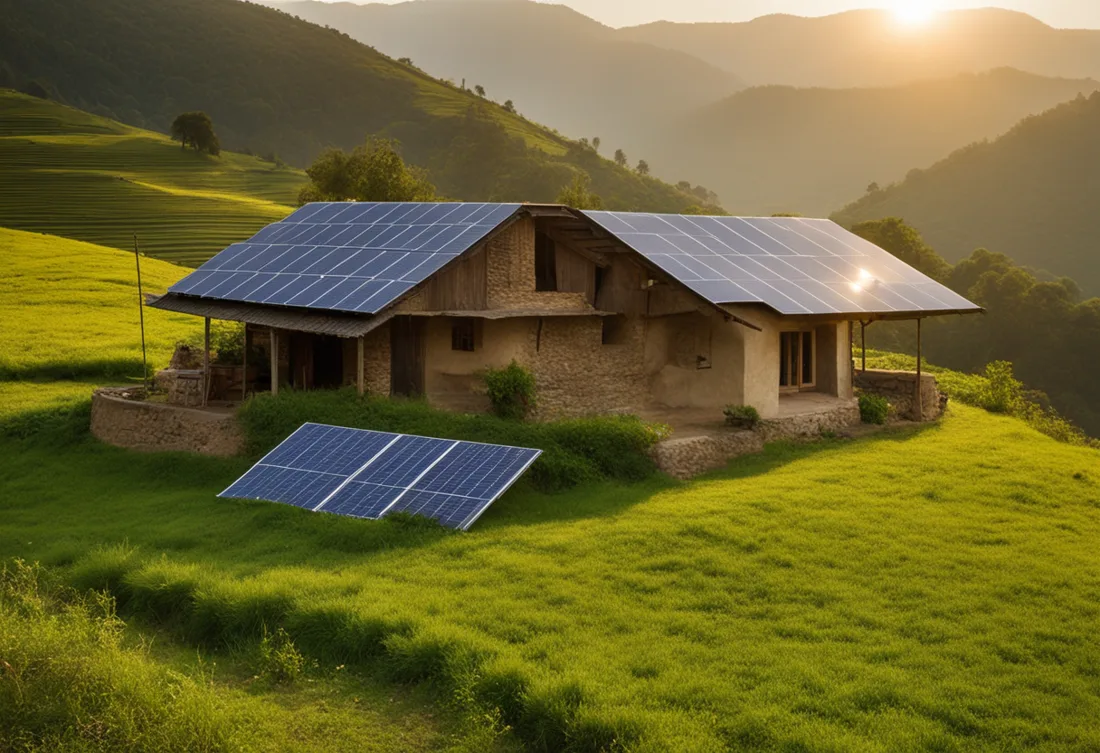
An off-grid (standalone) solar system makes and stores its own electricity — no grid connection needed. Solar panels charge a battery bank during the day, and that stored energy keeps your lights, fans, pumps and appliances running through the night.
Built for farmhouses, remote sites and areas where grid power is missing or unreliable.
- No grid needed
- Lithium battery options
- Made-in-India inverters
What is an off-grid solar system?
An off-grid system is a complete, self-contained power plant. Because there is no grid to fall back on, it is designed for autonomy — enough generation and storage to keep your home running even after a cloudy day.
On an overcast day, panels may produce only a small fraction of their normal output. A well-designed system stores extra energy on sunny days so you are covered when the weather turns.
- Remote and rural homes with no grid line
- Farmhouses, orchards and pump sets
- Sites with only a few hours of grid supply a day
- Telecom, security and site offices
Components of an off-grid system
Solar panels
Monocrystalline or TOPCon modules that turn sunlight into DC power.
Off-grid / hybrid inverter
Converts battery DC into clean, pure sine-wave AC for your appliances.
Battery bank
Lithium (LFP) or lead-acid batteries store energy for nights and cloudy days.
MPPT charge controller
Extracts maximum power from the panels and charges batteries safely.
Mounting structure
Galvanised steel frames at the right tilt to capture the most sunlight.
Protection & cabling
Combiner boxes, fuses, MC4 connectors, earthing and lightning arrester.
How an off-grid system powers your home
01Sunlight becomes DC power
Panels wired in strings generate direct current through the day.
02Strings are combined & protected
A combiner box joins the strings, with fuses to isolate any faulty string.
03Charge controller optimises
MPPT tracking squeezes the most power from the panels and manages charging stages.
04Batteries store the surplus
Energy you don’t use right away is stored for the evening and night.
05Inverter converts to AC
A pure sine-wave inverter supplies clean 230 V AC to your home.
06Smart load protection
When the battery runs low, non-critical loads are shed to protect battery life.
How we size your battery
The battery is the heart — and the biggest cost — of an off-grid system. We size it around four factors.
Days of autonomy
How many low-sun days the system must cover. Most homes are designed for at least one full day.
Depth of discharge
Lithium batteries can safely use about 90% of their capacity; lead-acid far less.
Round-trip efficiency
Some energy is lost while charging and discharging, so we add a buffer.
Day vs night use
Night-time load decides how much must be stored — often a third of daily use.
Typical off-grid configurations
Starting points to help you plan. We size your final system after a load survey.
| Need | What it runs | Typical system |
|---|---|---|
| Small home | Lights, fans, TV, fridge, phone charging | 2–3 kW solar + 5 kWh lithium battery |
| Medium home | Above + water pump, washing machine, 1 AC | 5 kW solar + 10 kWh lithium battery |
| Farmhouse / large home | Multiple ACs, pumps, kitchen appliances | 8–10 kW solar + 15–20 kWh lithium battery |
| Site office / shop | Lights, computers, CCTV, Wi-Fi | 2–5 kW solar + 5–10 kWh lithium battery |
Actual sizing depends on your appliances, hours of use, location and how many days of autonomy you need.
Advantages and limitations
Why choose off-grid
- Power where there is no grid
- Complete independence from outages and tariffs
- Clean, silent alternative to diesel generators
- Can be upgraded to hybrid later with the right inverter
Things to keep in mind
- Highest upfront cost — batteries are a big share
- Batteries need replacement during system life
- Not eligible for PM Surya Ghar subsidy
- Payback is longer, typically 6–8 years
On-grid vs off-grid vs hybrid
Not sure which system fits your home? Here’s how the three compare side by side.
| Factor | On-grid | Off-grid | Hybrid |
|---|---|---|---|
| Grid connection | Required | Not needed | Required |
| Battery | Not needed | Required | Required for backup |
| Power during a power cut | No — shuts down for safety | Yes, from battery | Yes, for selected backup loads |
| Net metering & export | Yes | No | Yes, if DISCOM allows |
| PM Surya Ghar subsidy | Yes | No | Yes, if net-metered |
| Upfront cost | Lowest | Highest | Medium to high |
| Typical payback | 3–5 years | 6–8 years | 5–7 years |
| Maintenance | Low | Higher (battery care) | Higher (battery care) |
| Best for | Reliable grid, lowest bills | No grid / remote sites | Frequent power cuts |
Payback periods are typical ranges and depend on your tariff, usage, sunlight and system design.
Why TPIL
Solar backed by 20 years of power expertise
Frequently asked questions
How much does an off-grid solar system cost?
Cost depends mainly on battery size and chemistry, followed by system size and inverter. Share your appliance list with us for an accurate quote.
Is there a subsidy for off-grid solar?
No. The PM Surya Ghar subsidy applies only to grid-connected rooftop systems. If you have a grid connection, a hybrid system may let you claim it.
How many batteries do I need?
It depends on your night-time load and how many days of autonomy you want. We calculate it from your actual appliances and usage.
Can I run an AC on off-grid solar?
Yes, with a correctly sized inverter and battery bank. ACs draw heavy power, so they significantly increase system size.
Lithium or lead-acid — which is better?
Lithium (LFP) batteries cost more upfront but last much longer, are maintenance-free and can use more of their capacity. They usually work out cheaper over the system’s life.
Which is better, off-grid or on-grid?
If you have a reliable grid, on-grid is cheaper and gets a subsidy. Off-grid is the right choice only when grid power is unavailable or very unreliable.